The role of the wali explained simply
May 27, 2026 · Barakameet
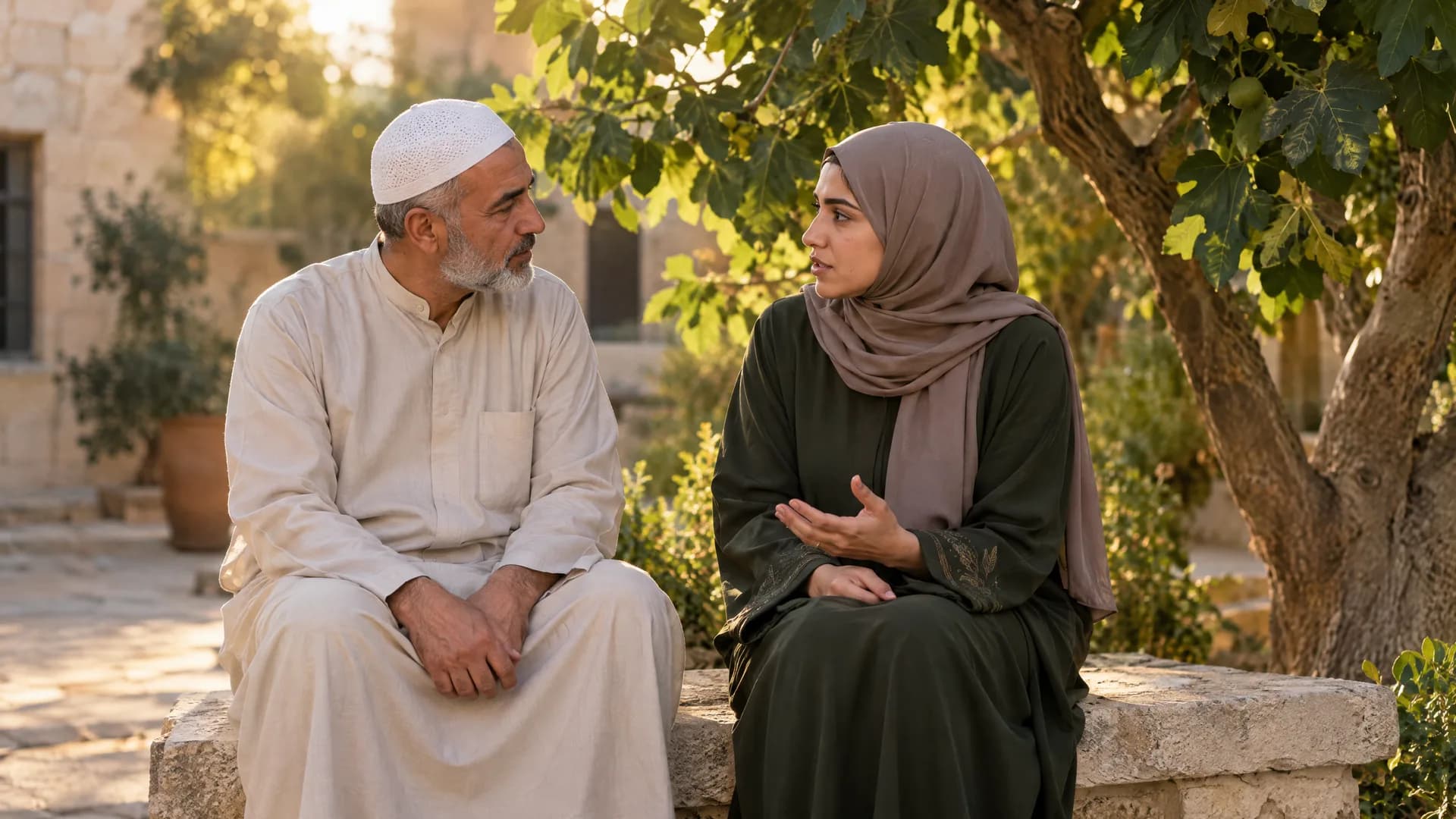
The wali — we hear about it all the time. But when you ask someone to explain it simply, you often get technical answers, Arabic juridical references, and a lot of confusion.
In this article, we take our time. We explain the wali with simple words, concrete examples, and answers to questions that brothers and sisters actually ask. If you want the full juridical version, you can also read our deep guide on the role of the wali. But if you just want to understand the basics without drowning, you're in the right place.
The idea isn't to replace an imam or a scholar. It's to give you clear understanding so you can move serenely toward halal marriage, in shaa Allah.
The wali in one sentence
The wali is the Muslim man who represents the sister at the moment of her marriage. He officially says "yes" on her behalf before the witnesses. Without a wali, the marriage is not valid according to the majority of Sunni juridical schools.
The word wali (وَلِيّ) in Arabic means protector, guardian, the one who takes charge. It's not an authoritarian title — it's a function of service toward the sister.
Why does the wali exist?
Three main reasons, two practical and one spiritual:
- Protect the sister from a rushed or ill-informed marriage. An outside family eye filters emotional mistakes.
- Include the family in the journey. Marriage in Islam isn't an affair of two isolated people — it's an alliance between two homes.
- Follow the prophetic teaching. The Prophet ﷺ clearly instituted the presence of the wali, as indicated in several authentic hadiths.
« No marriage without a wali. »
— Sunan Abu Dawud 2085 · Sunan At-Tirmidhi 1101
The hadith is short but unambiguous. It's a pillar, not a recommendation.
Who can be your wali?
There is a traditional order, based on family closeness through the paternal line. If the first is absent, unavailable or disqualified, the next one takes over:
- Your father — first wali by default.
- Your paternal grandfather — if your father is absent.
- Your brothers — full brothers first, then half-brothers on the father's side.
- Your paternal uncles — your father's brothers.
- Your paternal cousins — sons of your paternal uncles.
- The imam or a Muslim judge — if no member of the agnatic family is suitable.
Three conditions for a wali to be valid: be Muslim, be adult and of sound mind, and be male (according to the majority of schools). A non-Muslim father cannot be wali — the next person in the order then takes the role.
What the wali does — and what he doesn't
Much confusion comes from a wrong understanding of the wali's scope. Let's see clearly:
The wali DOES:
- Give his approval to the marriage at the time of the nikah.
- Verify the suitor's seriousness: his dîn, character, material capacity.
- Meet the brother and his family before commitment.
- Accompany the sister during the discovery phase (being informed, morally present).
- Advise — with wisdom, without imposing.
The wali DOES NOT:
- Decide instead of the sister.
- Force a marriage the sister refuses.
- Refuse without a legitimate reason a pious and compatible suitor.
- Watch every word of conversations.
- Turn wilaya into a tool of family blackmail.
If a wali abusively refuses a valid halal marriage, the sister can turn to an imam or a Muslim judge for another wali to be designated. This is provided for by the shari'a — wilaya serves the sister, it doesn't own her.
Three concrete examples
To make things concrete, here are three common situations:
Example 1 — A sister in the diaspora whose father is in the home country. The father remains the wali. The sister can keep him informed by phone, video, or via an intermediary family member. The wali can delegate a local imam to represent him at the nikah if needed.
Example 2 — A convert whose family isn't Muslim. Her father cannot be wali. She turns to her mosque imam or a trusted scholar, who becomes her wali al-amr (circumstantial guardian).
Example 3 — A sister whose father refuses a valid halal marriage for non-religious reasons (race, social class, personal animosity). The sister can appeal to another member of the agnatic family or to an imam, and invoke the wilaya transfer mechanism before a judge.
The wali on Barakameet
On the platform, you can add your wali: he receives the messages by email. It's a simple way to respect the traditional framework while using a modern tool. The family is reassured, seriousness is set from the first message.
To go further in the juridical understanding of the wali, see our complete guide. To understand the steps of the nikah as a whole, read the steps of Muslim marriage in Africa.
If you're seeking a spouse within the halal, Barakameet is built for that.